Clear admin use case
The module set points to a practical problem space: managing limited software capacity and spend across multiple teams.
Administrative platform for seat pools, users, organizations, queue handling, billing, vendors, settings, and audit visibility.
Screen walkthrough
This gallery shows progression, not just a single hero frame. Use it to talk through navigation depth, records, analytics, and workflow context during a call.
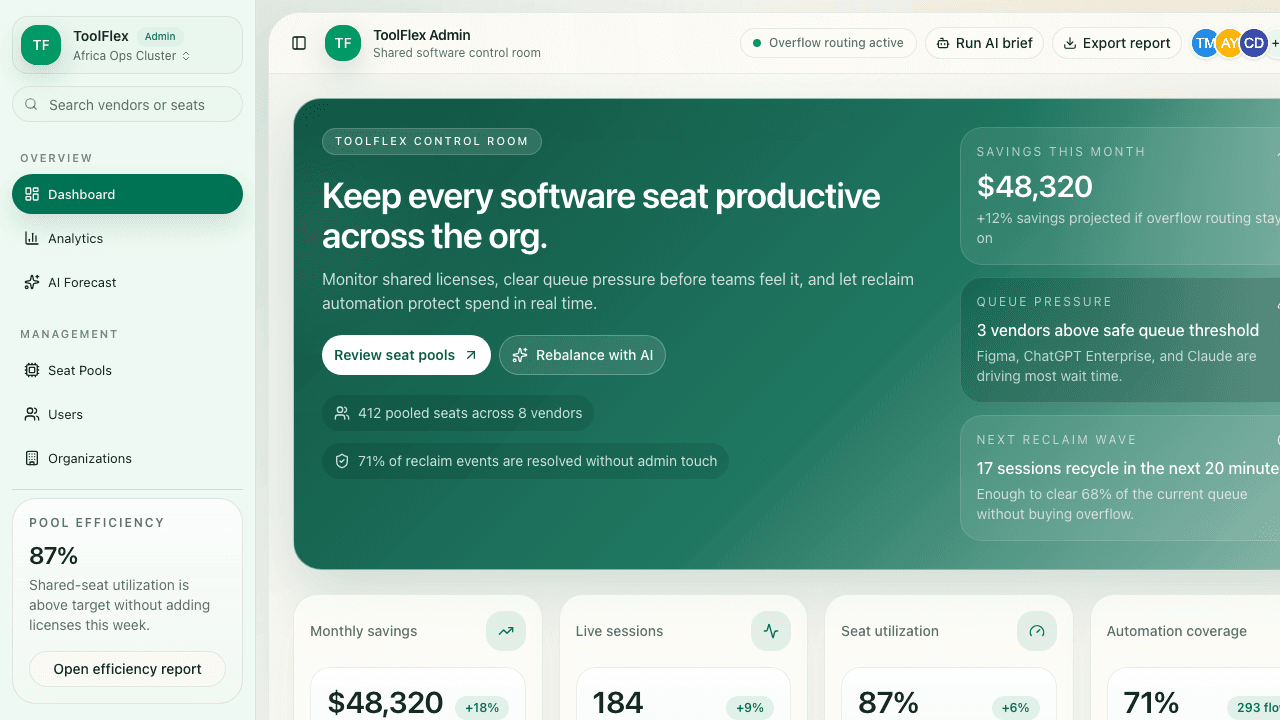
Primary interface capture used for the listing card and story lead.
Overview
ToolFlex is a good example of internal SaaS operations software. The visible modules are about seat pooling, organizational control, queue management, billing, vendors, and audit logs, while the dashboard foregrounds efficiency and utilization as primary operating metrics.
Strongest story angle
Position this one as a cost and utilization control product for teams managing shared software capacity at scale.
Observable modules
Why this one works
The module set points to a practical problem space: managing limited software capacity and spend across multiple teams.
Utilization and pool efficiency give the case study a crisp operational outcome narrative without inventing unsupported business claims.
This platform supports portfolio positioning around back-office tooling, cost optimization, and enterprise admin surfaces.
Motion outline
Open on the admin shell and the seat-efficiency metric.
Highlight seat pools, queue, billing, vendors, and audit modules.
Close on the message of higher utilization without more licenses.
Next publishing pass
The structure is now cleaner: better screenshots, stronger conversion paths, and shared page chrome that behaves correctly. The next layer is adding repository-backed build notes and verified outcome data.
Still worth adding