Institution-specific adaptation
The platform shows how a recovery workflow can be branded and structured for a named financial institution without losing operational depth.
Debt recovery workspace tailored to a banking context, with debtor handling, loan products, payments, messaging, and AI operations.
Screen walkthrough
This gallery shows progression, not just a single hero frame. Use it to talk through navigation depth, records, analytics, and workflow context during a call.
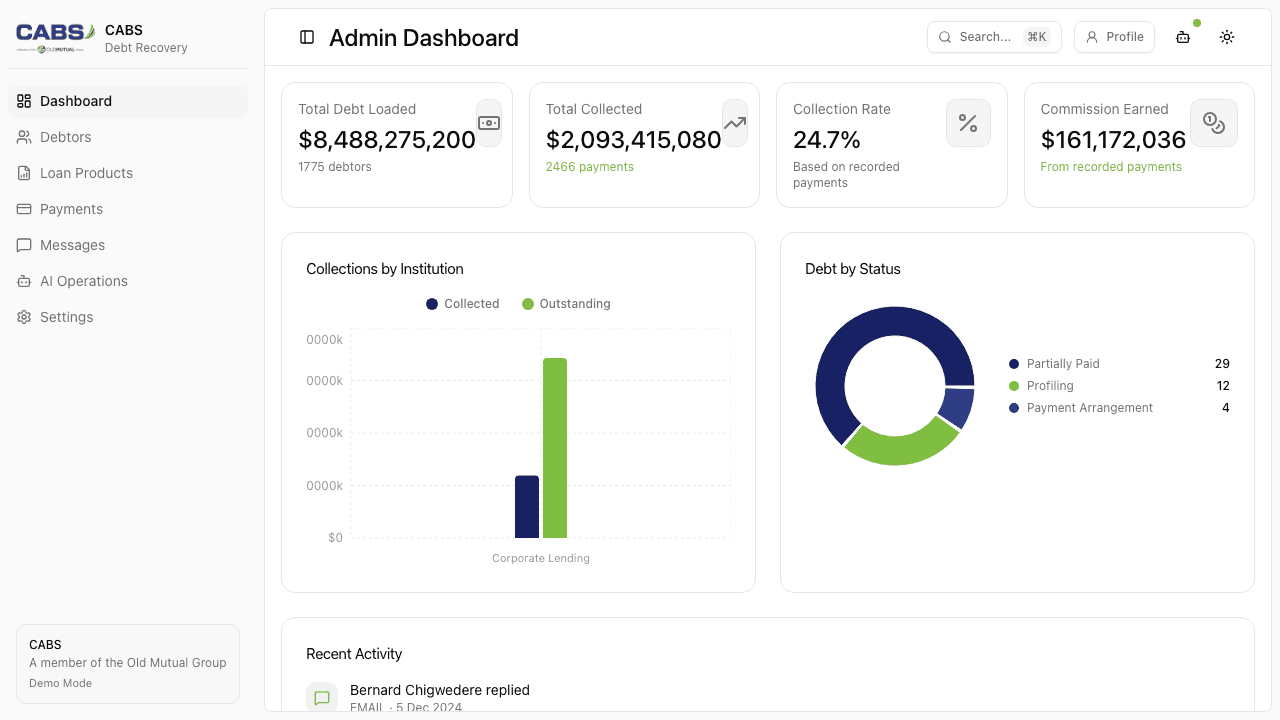
Primary interface capture used for the listing card and story lead.
Overview
This platform uses almost the same operational grammar as a specialist collections desk but grounds it inside a bank-branded environment. Debtors, loan products, payments, and AI operations are visible alongside collection metrics and outstanding balances.
Strongest story angle
Position it as proof that the same recovery engine can be adapted for institution-specific financial operations.
Observable modules
Why this one works
The platform shows how a recovery workflow can be branded and structured for a named financial institution without losing operational depth.
Collected, outstanding, and debt-status views keep the story focused on book performance rather than isolated tasks.
This case study supports pitches around recovery platforms, borrower operations, and portfolio servicing tools.
Motion outline
Open on the bank identity and dashboard shell.
Sweep across debtors, loan products, and payment modules with portfolio metrics.
Close on the message that this is recovery software built for institutional teams.
Next publishing pass
The structure is now cleaner: better screenshots, stronger conversion paths, and shared page chrome that behaves correctly. The next layer is adding repository-backed build notes and verified outcome data.
Still worth adding