Context-specific recovery story
The clinic-linked framing helps you tell a more believable receivables narrative than a generic debt dashboard would.
Debt recovery desk for a healthcare-linked receivables portfolio, with debtors, recovery queues, payments, messages, and AI operations.
Screen walkthrough
This gallery shows progression, not just a single hero frame. Use it to talk through navigation depth, records, analytics, and workflow context during a call.
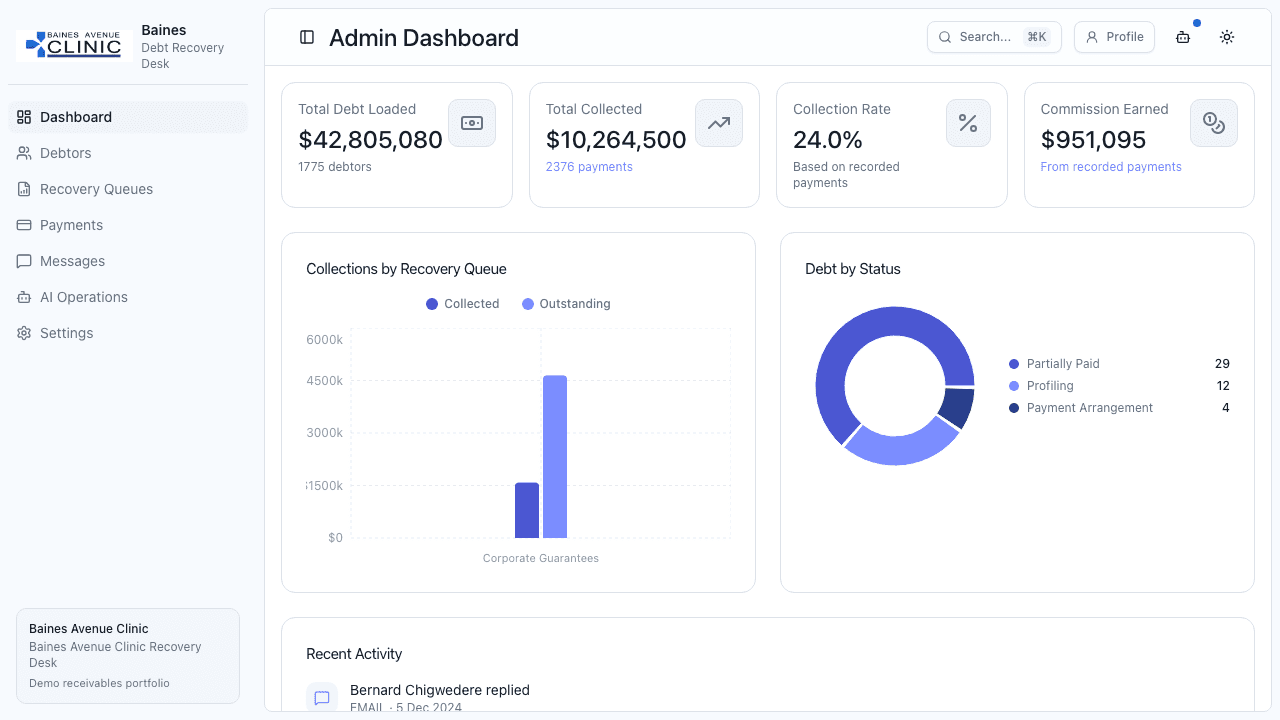
Primary interface capture used for the listing card and story lead.
Overview
Baines Debt Collection is useful because it shows a collections platform adapted to a specific operating context. The dashboard names recovery queues and a sample receivables portfolio for Baines Avenue Clinic, which makes the case study feel more concrete than a generic debt tool.
Strongest story angle
Frame it as a domain-adapted recovery desk that bridges receivables operations and patient or client collections workflows.
Observable modules
Why this one works
The clinic-linked framing helps you tell a more believable receivables narrative than a generic debt dashboard would.
Recovery queues make the workflow feel active and triaged, which is helpful when describing day-to-day collections handling.
Together with Baines Claims, this creates a stronger healthcare finance story across claims processing and recovery operations.
Motion outline
Open on the recovery desk title and clinic context.
Highlight recovery queues, debtors, payments, and AI operations.
Close on the idea of a targeted receivables command center.
Next publishing pass
The structure is now cleaner: better screenshots, stronger conversion paths, and shared page chrome that behaves correctly. The next layer is adding repository-backed build notes and verified outcome data.
Still worth adding